
By Sasha Ablovatskiy, Founding Partner
See Sasha’s original post on LinkedIn
The SEC recently published its updated capital markets statistics. As a deal lawyer and angel investor, I read them for one question: where is capital actually flowing, and through which doors? Here are the numbers that stood out for the first half of 2026.
1. SPACs are back, and they are now the majority of IPOs
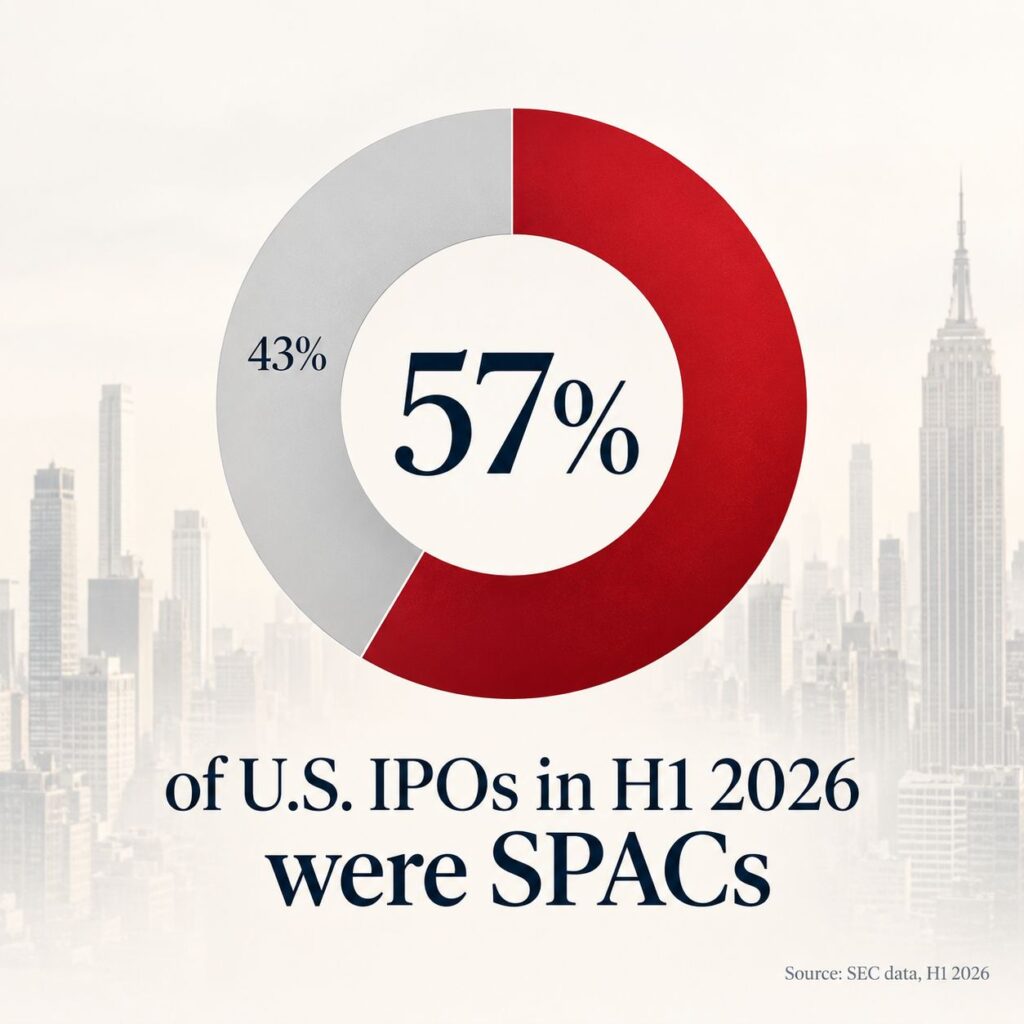
118 of the 208 IPOs in the first half of 2026 were blank check companies, or SPACs. That is 57%, up from 37% a year earlier. SPACs still account for only about 15% of the dollars raised, but the count matters: more SPACs are now out there looking for private companies to merge with.
For a private company, that means the business combination route to the public markets is more available than it has been in some time. It also means more choice, and more need to evaluate a SPAC partner carefully.
2. IPO activity is up sharply
208 IPOs raised more than $137 billion in the first half of 2026, compared with 180 IPOs and just over $27 billion a year earlier.
3. The IPO window is open, mostly for larger issuers
Corporate IPOs (excluding SPACs and funds) actually fell, from 111 to 88. The median corporate IPO raised $279.5 million in the second quarter of 2026, compared with $14.6 million in the second quarter of 2025. IPOs by non-U.S. issuers dropped from 76 to 30. In the second quarter, the average corporate IPO raised $2.0 billion, far above the median.
In other words, the headline numbers are driven by a smaller number of large deals. Smaller companies should not read a strong IPO market as a signal that a traditional IPO is automatically the right route for them.
4. Private capital is still bigger
Non-fund issuers raised about $170 billion through Regulation D private placements in the first half of 2026, up 23% year over year and about 1.5 times what corporate IPOs raised. A year earlier, that gap was about 9 times. The median Reg D offering by non-fund issuers in the second quarter was about $1.7 million.
5. Regulation A keeps growing steadily
The number of qualified Reg A offerings grew by a net 61 in the first half of 2026. Since 2015, issuers have sought about $34 billion under Regulation A and reported raising at least $11 billion. It has become a real source of funding for growth companies that want to raise from a broader investor base without a full IPO.
6. Crowdfunding is cooling
The number of Regulation Crowdfunding (Reg CF) offerings grew by a net 390 in the first half of 2026, down from 511 a year earlier. Reported Reg CF proceeds since 2016 total at least $1.64 billion.
The takeaway: the path matters more than ever
Capital is available, but the route to it matters more than ever. A private placement, a Reg A offering, a business combination with a SPAC or an existing public company, or a traditional IPO: each fits a different kind of company at a different stage. Choosing the right one is now a strategic decision, not a default.
For more on how these routes compare, see There’s More Than One Way to the Public Markets.
Questions about your own situation? Talk to us.
This article is provided for informational purposes only and does not constitute legal advice. Reading it does not create an attorney-client relationship.